
NOVEMBER 5, 2025 — Building a pipeline is a herculean task. Energy companies must be willing to deal with volatile oil and gas prices, exhaustive government reviews, interminable protests and lawsuits, and especially of late, soaring materials costs.
Earlier this year, in fact, Oil & Gas Journal reported that pipeline construction costs have reached a record high:
Sharply higher costs in all categories—particularly material, which roughly doubled—increased the estimated price of building land pipelines by about $4.5 million/mile, to a record $12.1 million/mile. Estimated miscellaneous costs increased by almost two-thirds, about $1.8 million/mile, and labor costs also rose, by nearly $1.2 million/mile.
Nonetheless, today’s more favorable federal regulatory environment is encouraging pipeline construction. The Federal Energy Regulatory Commission, for one, is tracking two dozen pending natural gas pipeline projects across 19 states.
Strategic value of secondary-market sales
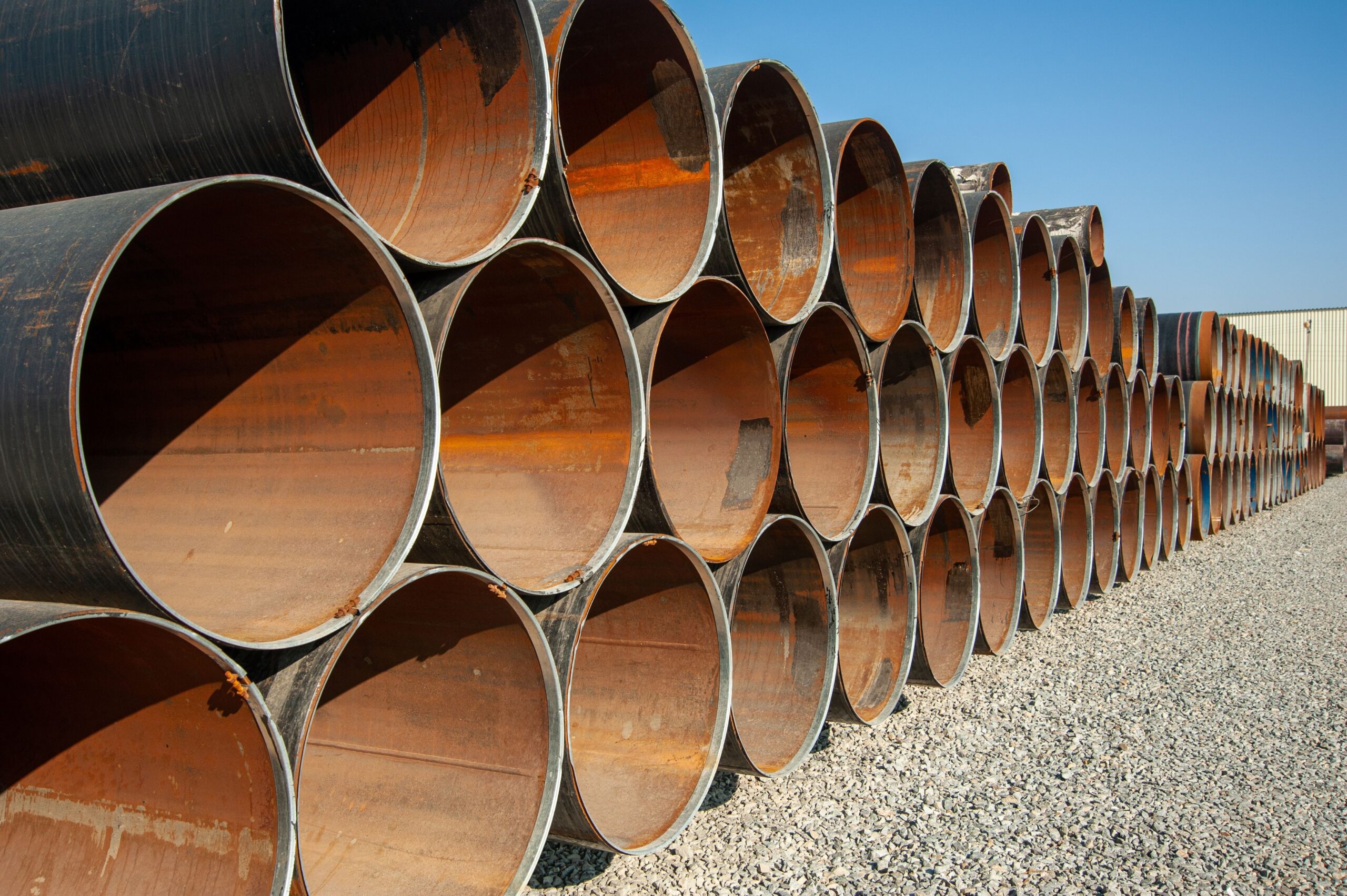
Energy companies engaged in pipeline construction and maintenance should consider containing costs by sourcing material and heavy equipment on the secondary market. Massive amounts of unused drill pipe, line pipe and casing, for example, can typically be found at auction, yielding enormous savings over buying new.
Companies also can use online auctions to sell their excess equipment, generating liquidity that can give them more strategic flexibility.
Back in 2020, when plummeting natural gas prices contributed to the cancellation of the Williams Companies’ Constitution Pipeline, Tiger Commercial & Industrial offered more than 600,000 feet of unused 30-inch line pipe stored in in New York.
Tiger C&I marketed the inventory over an 18-month period and sold the pipe to more than 60 different buyers in an array of industries, working with a trusted partner to manage the logistics and removal of the pipe from the yard. Proceeds from the two-year structured-finance liquidation topped $30 million.
Williams, by the way, is now working to revive the Northeast Supply Enhancement of its Transcontinental Gas Pipe Line as well as its Constitution Pipeline, which the company says will stretch 125 miles from Susquehanna County, Pennsylvania, to Schoharie County, New York. Likewise, Kinder Morgan aims to move forward with its $3.5 billion South System Expansion 4 natural gas pipeline through east Alabama and west Georgia.
Nonprofit groups are already lining up in opposition to both projects.
Chad Farrell, Managing Director of Tiger Commercial & Industrial, has sold more than $1 billion of surplus and distressed assets in the energy, transportation, construction, manufacturing, mining, metals and retail sectors; cfarrell@tigergroup.com